Ancestral Travel
Family history exists in real places.
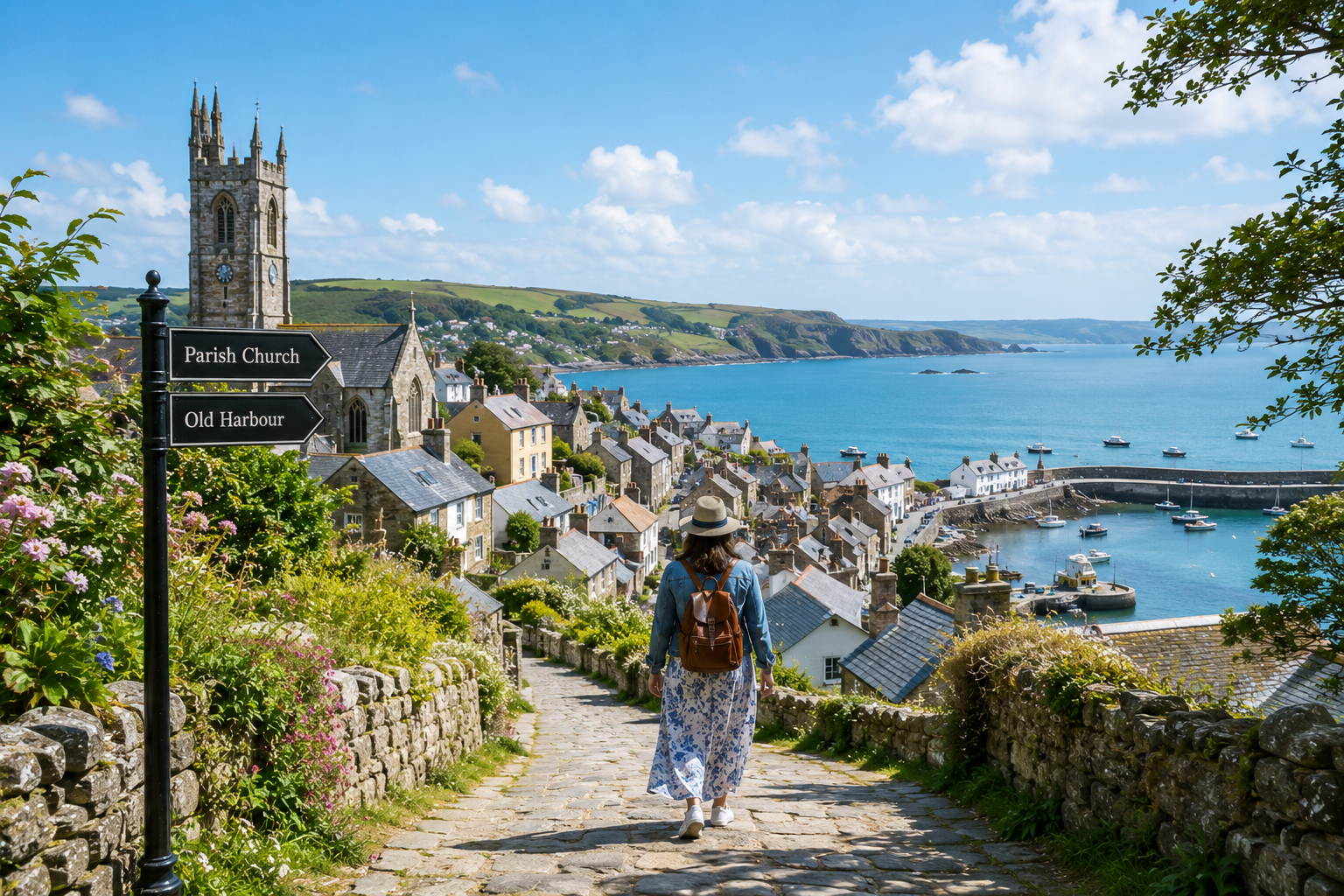
Ancestral travel is the experience of visiting the places connected to your family history.
It combines genealogy, local history, archives, landscapes, memory, and travel into something far more personal than traditional tourism.
For some people, it might mean standing in the church where their ancestors were baptized. For others, it could involve walking through an old mining village, visiting a cemetery, researching in an archive, seeing a family farm for the first time, or simply standing in a place that had previously only existed in records and stories.
At its heart, ancestral travel is about reconnecting family history to physical place.
A Different Kind of Journey
More Than Tourism
Ancestral travel is different from ordinary sightseeing.
Most travel asks:
- What should I see?
- What attractions are nearby?
- What is famous here?
Ancestral travel asks something very different:
- Who lived here before me?
- Why did my ancestors come from this place?
- What kind of world shaped their lives?
- What traces of that world still exist today?
Sometimes the places connected to family history are well known. Sometimes they are tiny villages, forgotten cemeteries, isolated townlands, industrial streets, parish churches, or communities that barely appear on modern maps.
And honestly, those smaller places are often the most meaningful.
Why Place Matters
Records point back to real landscapes.
Genealogy research often begins through records:
- census returns,
- parish registers,
- civil registration records,
- passenger lists,
- military records,
- maps, directories, newspapers, and photographs.
But eventually, many researchers realize those records all point back to real places.
A village in Cornwall. A parish in Yorkshire. A townland in Ireland. A farming township in Ontario. A street in Glasgow. A cemetery in Nova Scotia.
Visiting those places can completely change how family history feels.
Distances suddenly make sense. Landscapes explain occupations. Churches reveal community life. Harbours explain migration. Industrial ruins reveal working conditions. Geography helps explain why ancestors stayed, left, struggled, or moved elsewhere.
What It Can Include
Ancestral travel can take many forms.
Ancestral travel can take many forms depending on the person, family history, and location involved.
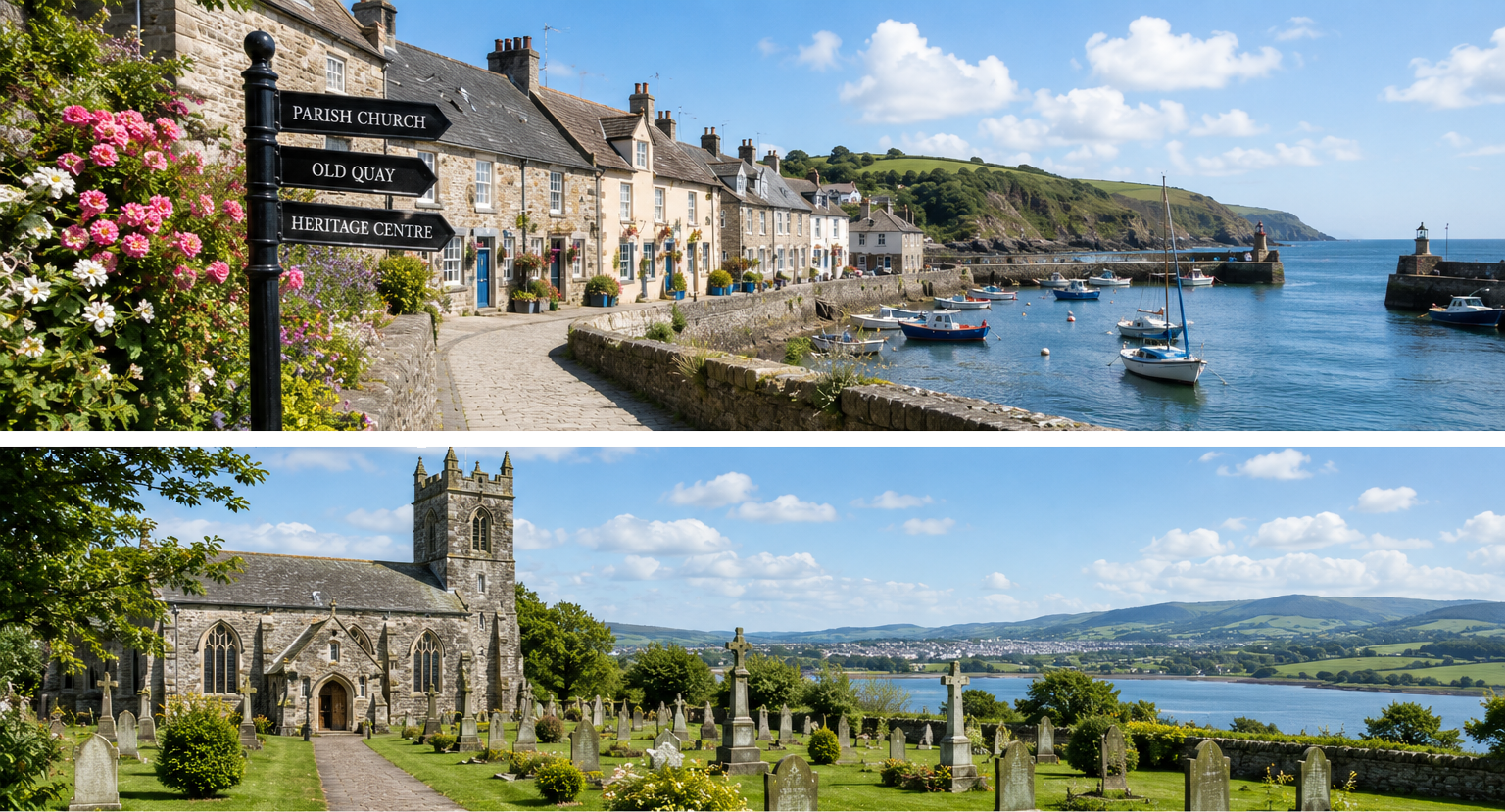
Villages & Towns
Visiting ancestral villages, towns, streets, farms, and family communities.
Churches & Cemeteries
Walking through parish churches, graveyards, burial grounds, and memorial spaces.
Archives & Libraries
Researching in local archives, libraries, museums, and historical societies.
Migration Places
Exploring harbours, ports, industrial districts, and routes connected to movement.
Some people travel internationally for this. Others discover meaningful family history experiences surprisingly close to home.
Even visiting the town where a grandparent grew up can become a form of ancestral travel.
Before You Go
Research before you travel.
The most meaningful ancestral travel usually begins long before the trip itself.
Good genealogy research helps identify:
Understanding the history surrounding a place often makes the experience much richer once you arrive.
For example, knowing that an ancestor lived within a mining community, fishing village, industrial district, or agricultural township changes how you experience that landscape in person.
Connected Ideas
Ancestral Travel and Social Genealogy
Ancestral travel is closely connected to social genealogy.
Both approaches focus on understanding ancestors within the real communities and environments they experienced.
Instead of seeing family history only as a collection of names and dates, ancestral travel encourages people to think about:
- how geography shaped daily life,
- how migration changed families,
- how communities evolved over time,
- and how ordinary people experienced historical events within physical places.
Sometimes simply standing in the right place changes how a family story is understood.
The Emotional Side
The moment genealogy becomes physical.
One of the most surprising parts of ancestral travel is how emotional it can feel.
Many people expect genealogy to remain mostly intellectual or document-based until they physically arrive in a place connected to their ancestors.
Then suddenly:
- a surname on a gravestone feels real,
- a village street feels familiar,
- a churchyard feels personal,
- or a landscape helps explain generations of family stories.
Not every trip creates dramatic moments, and that is perfectly normal. Sometimes the experience is quieter than expected.
But even quiet moments can create a powerful sense of connection between family history, place, and memory.
Final Thought
Family history happened somewhere.
One of the most meaningful things genealogy can teach us is that history did not happen somewhere abstract.
It happened in real villages, real homes, real churches, real harbours, real cemeteries, and real communities where ordinary people built their lives.
Ancestral travel reconnects family history to those places.
It reminds us that the people in our family trees once walked through actual landscapes that still exist today.
And honestly, sometimes standing in those places becomes one of the closest connections we can still have to the worlds our ancestors once knew.